
Short answer: Email marketing for a clothing brand launch has three parts: the waitlist notes you send while the product is being made, the launch sequence when sales open, and the follow-up in the first weeks after someone buys. The list should hear the news first, with a clear offer and a direct link. You do not need a large automation stack to do this well. You do need permission, honest dates, and emails that would still be useful if the reader never followed you on social media.
Written by Klas and Ana Kristiansson, November 17, 2026.
Social posts disappear. An email list is a way to reach people who already said they want to hear about the brand. That is why the list sits at the centre of how to market a clothing brand with no audience and how to get your first 100 customers. This page is the writing and the timing.
Write in the same plain voice you would use to a buyer who messaged you directly. Short paragraphs, one purpose per email, and a single main link. Do not lean on fake urgency or a “was” price you never charged.
Collect the address on a simple page, and say how often you will write. Then keep that promise. Useful waitlist notes, once you have a sample or a firm date, include:
If production slips, tell the list. A delayed date that people hear about from you is better than a silent delay and a last-minute excuse.
An example cadence, not a rule: a welcome email on sign-up, then one note every two or three weeks, then weekly in the two weeks before you open. If you have nothing new to say, wait. Empty emails train people to ignore you.
The list goes first, then your public channels. A compact sequence is enough for a first drop. The table is an example you can shorten or stretch.
| When (example) | Purpose | Main link | |
|---|---|---|---|
| 1. List preview | A few days before you open, or the morning of | What is launching, who it is for, price, and when the door opens | Waitlist page or a password page, if you use one |
| 2. We are open | When you actually can take the order | The product, sizes, shipping basics, and a direct product link | The product or shop page |
| 3. Fit and details | One or two days later | Size guide, fabric, how it is meant to sit, answers to early questions | The product page and size guide |
| 4. Reminder | Later in the week, only if stock remains | A calm reminder, plus any sizes that are genuinely gone | The product page |
| 5. Close or thank you | When the window ends, or a week later | What sold, what is left, and when leftovers or a next drop might appear | Shop, or a form for the next list |
Example sequence only. Skip a reminder email if you have nothing true to add.
Each email should be able to stand alone. Someone who missed email 1 still needs the price and the link in email 2. Put the important facts in the body, not only in an image, so they show up when images are blocked.
The wording below is an example of tone and structure. Replace every product fact with your own.
Subject: The first drop is open (example subject)
Hi,
The first [style name] is on the site from today. It is made for [who it is for], in [fabric in plain language], and it is meant to fit [how it fits]. The price is [price].
If you want one, the best place to start is the size guide on the product page. I have included [model or garment measurements, if you have them].
Shipping is [short summary]. If your size is gone, reply to this email and I will tell you whether a restock is planned.
Thank you for waiting with me.
[Your name]
That is the shape: who it is for, what it is, price, fit, a link, and a way to ask a question. You can be warmer or more brief, but keep those facts in.
Once someone has paid, the job changes. They need the order to arrive as promised, to know how to care for the garment, and to have a way to raise a fit or quality problem without a hunt. A simple 30-day follow-up might look like this (again, an example):
The Post Launch Profit Maximizer ($27) is a 30-day post-launch email sequence for this stage. Use it if you want a ready structure rather than drafting every note from a blank page. For the pre-launch and launch-week task list, use the Launch and Sell Marketing Campaign Checklist ($27).
Email cannot fix a weak product page. Before you send a launch sequence, make sure the destination is ready: photos, fit, shipping and checkout. Use what to put on a clothing brand website that sells as the checklist for that page.
If you want the email work inside a wider launch plan, the Clothing Brand Launch Roadmap ($39) places marketing tasks next to production and budget, and the 12-week study path shows where this guide sits in the reading order.
Post Launch Profit Maximizer, $27
A 30-day post-launch email sequence for after someone has already bought. Use it together with the waitlist and launch-week notes in this guide. Digital download.
For the pre-launch and launch task list, the Launch and Sell Marketing Campaign Checklist is also $27.
Start collecting emails as soon as you can describe the offer and show a real product image or sample. You do not need a full shop. A waitlist page is enough. Writing to that list should start once you have something useful to say, not only on launch day.
A short, regular rhythm is better than a long silence and then a burst. An example is one note every two or three weeks while you develop the product, then a tighter sequence in launch week. Adjust if your production date moves.
Tell the list first, with the date, the product, the price, who it is for, and a direct link to buy or to reserve a size. Follow with a short reminder, and a note on sizes or colours that are going if that is true. Do not invent scarcity.
No. For a first launch you can send the waitlist and launch notes yourself from a simple email tool. Automations help later for welcome notes and post-purchase follow-up, once the wording is settled.
A clear order confirmation and shipping update first. Then care and fit, how to get in touch about a problem, and what is coming next if that is real. A 30-day sequence is a useful frame for this, not a hard rule.
No. Write to people who asked to hear from you. Bought lists are often against the rules of email tools, and they damage trust before the first garment has shipped.
Ready-made tech pack layout, measurement spec and BOM templates, vector flats and croquis. Download today.

Ana and Klas Kristiansson founded Apparel Entrepreneurship in 2016. Ana has 26 years of experience designing sports and outdoor products and has visited over 150 factories.
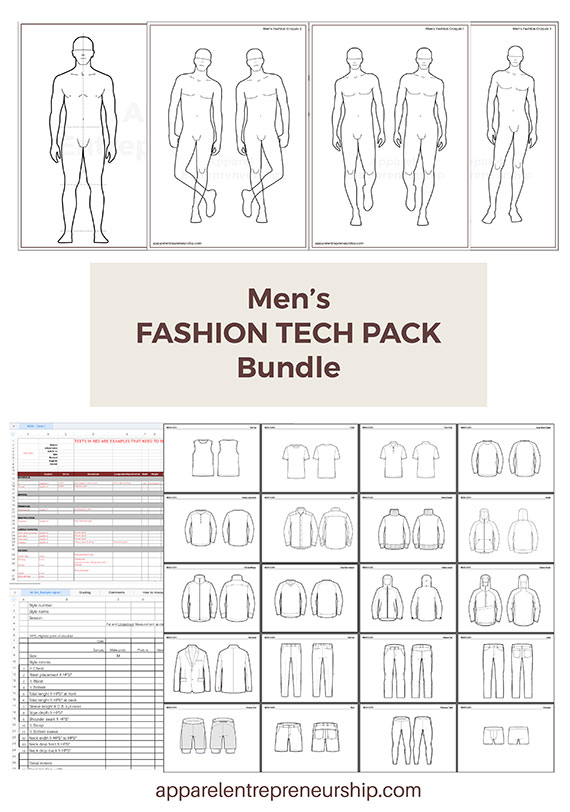
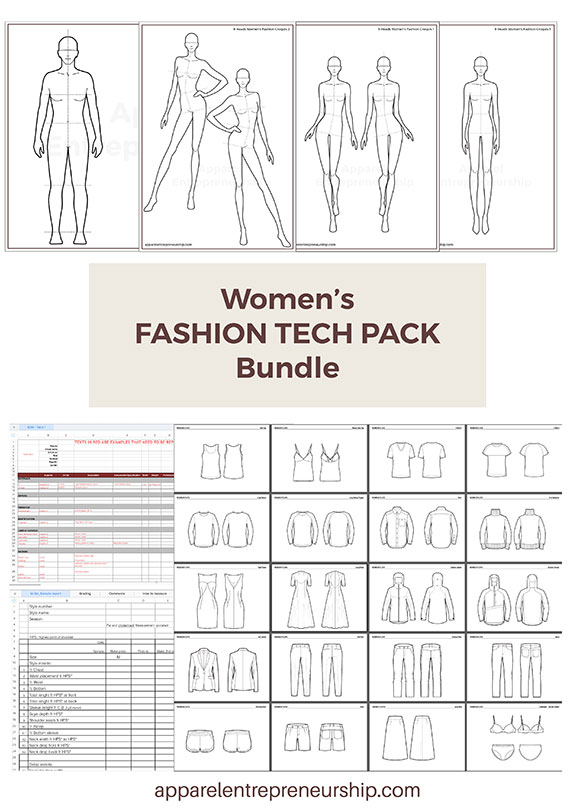
Editable tech pack, vector flats, croquis, BOM and measurement lists.
From $97
Browse templates Men's & Women's bundle $199 ›| Cookie | Duration | Description |
|---|---|---|
| __stripe_mid | 1 year | Stripe: fraud prevention when you pay. |
| __stripe_sid | 30 minutes | Stripe: fraud prevention when you pay. |
| __wpdm_client | Session | Download Manager: keeps your file download session. |
| _GRECAPTCHA | 6 months | Google reCAPTCHA: protects checkout against spam and bots. |
| cookielawinfo-checkbox-analytics | 1 year | Stores your choice for the Analytics category. |
| cookielawinfo-checkbox-marketing | 1 year | Stores your choice for the Marketing category. |
| cookielawinfo-checkbox-necessary | 1 year | Stores your choice for the Necessary category. |
| CookieLawInfoConsent | 1 year | Stores your choice for each cookie category. |
| viewed_cookie_policy | 1 year | Stores whether you accepted or rejected cookies. |
| woocommerce_cart_hash | Session | WooCommerce: keeps your cart up to date. |
| woocommerce_items_in_cart | Session | WooCommerce: remembers that your cart has items. |
| wp_woocommerce_session_ | 2 days | WooCommerce: links your cart to your visit. |
| Cookie | Duration | Description |
|---|---|---|
| _ga | 2 years | Google Analytics: tells visits apart. |
| _ga_GCP09MYT6R | 2 years | Google Analytics: keeps the state of your visit. |
| sbjs_current | Session | WooCommerce order attribution: remembers which channel brought you to the site. |
| sbjs_current_add | Session | WooCommerce order attribution: remembers which channel brought you to the site. |
| sbjs_first | Session | WooCommerce order attribution: remembers which channel brought you to the site. |
| sbjs_first_add | Session | WooCommerce order attribution: remembers which channel brought you to the site. |
| sbjs_migrations | Session | WooCommerce order attribution: remembers which channel brought you to the site. |
| sbjs_session | 30 minutes | WooCommerce order attribution: remembers which channel brought you to the site. |
| sbjs_udata | Session | WooCommerce order attribution: remembers which channel brought you to the site. |
| Cookie | Duration | Description |
|---|---|---|
| _fbc | 3 months | Meta Pixel: stores the ad click that brought you here. |
| _fbp | 3 months | Meta Pixel: measures visits from our ads. |
| sib_cuid | 6 months | Brevo: links site visits to our email and push messages. |
Sign up for our Newsletter, giving you industry updates, content, tools, inspiration, guides, and special offers.
Your data will be handled according to our privacy policy.