What Is a Tech Pack? What to Include, How to Make One, and Why It Matters (2026)

Tech Pack

A builder would never build a house without a blueprint. Same thing with a garment.

A tech pack is that blueprint – the document that tells your pattern maker and manufacturer exactly what you want, how to make it, and what ‘correct’ looks like.

If you’re serious about getting your samples right, reducing mistakes, and scaling production without chaos, you need tech packs that are clean, clear, and complete.

Tech packs are still the core document, but the expectations are higher now. Factories move fast, your product data needs to be accurate, and AI can speed up parts of the process – but only if your foundation is solid.

This guide is designed to be the most practical, no-fluff tech pack article you’ll find. You’ll learn exactly what to include, how to build it page-by-page, and how to avoid the mistakes that cost founders real money.


Table of Contents

  1. What is a tech pack (simple definition)
  2. Who uses a tech pack and when you need it
  3. What a tech pack includes (full checklist)
  4. Tech pack pages: the exact page-by-page structure
  5. How to make a tech pack (step-by-step workflow)
  6. Measurements, POMs, and tolerances (the section most founders mess up)
  7. Bill of Materials (BOM) and trims – how to document it properly
  8. Construction details and quality checkpoints
  9. Colorways, graphics, prints, and placements
  10. Labels, packaging, and compliance info 
  11. Fit comments, sample tracking, and version control
  12. Tech pack formats: Illustrator, Excel, PDF, PLM – what to use
  13. How much does a tech pack cost? (DIY vs outsourced)
  14. AI and modern tools for tech packs 
  15. Common tech pack mistakes and how to avoid them
  16. FAQ 
  17. How we can help (templates, coaching, course, 6-week accelerator)


1) What is a tech pack (simple definition)

A tech pack (technical package) is a multi-page document that contains everything a pattern maker and manufacturer needs to develop, sample, and produce a garment accurately.

Think of it as the instruction manual for your product.

A tech pack is not ‘a sketch and a vibe’. It is a set of specs, measurements, materials, construction instructions, and production notes that reduce guesswork and protect your brand from expensive mistakes.

One garment equals one tech pack. Every style needs its own tech pack.


2) Who uses a tech pack and when you need it

Tech packs are used by:

  • Brand founders and designers (to document decisions)
  • Technical designers and product developers (to translate design into manufacturing reality)
  • Pattern makers (to build patterns and grade sizes)
  • Factories and sample rooms (to create prototypes and bulk production)
  • Sourcing teams (to match fabrics and trims to requirements)
  • Quality control (to check the product against a defined standard)


You need a tech pack before sampling. Not after. If you send a factory a half-finished spec, you’ll pay for it in revisions, delays, and inconsistent results.

If your factory is overseas, tech packs matter even more. The people on the production floor often don’t speak English. Your drawings and specs become the language.


3) What a tech pack includes (full checklist)

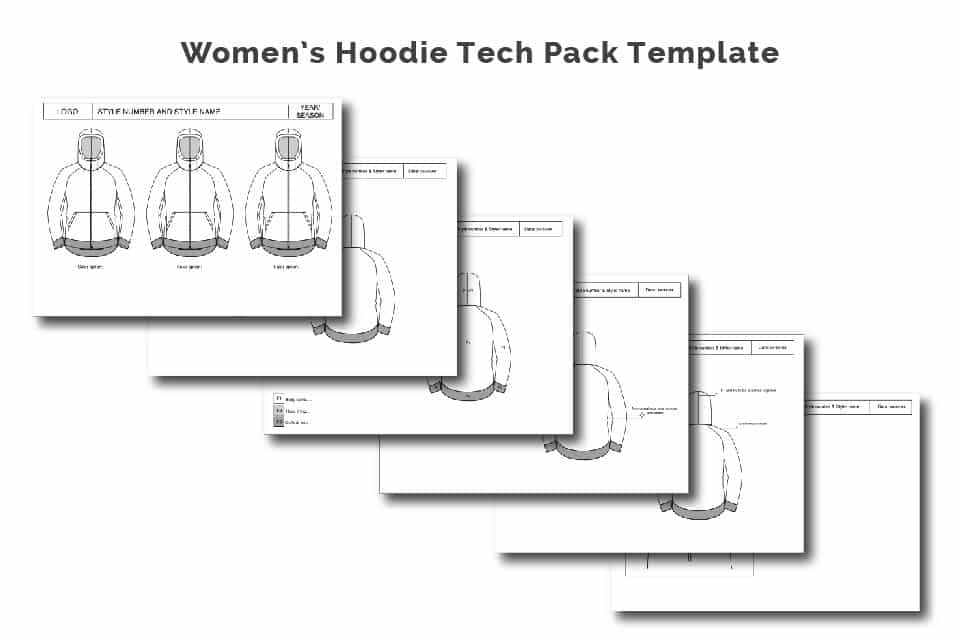
A professional apparel tech pack typically includes:

  • Cover page (style info, season, designer/brand, date, version)
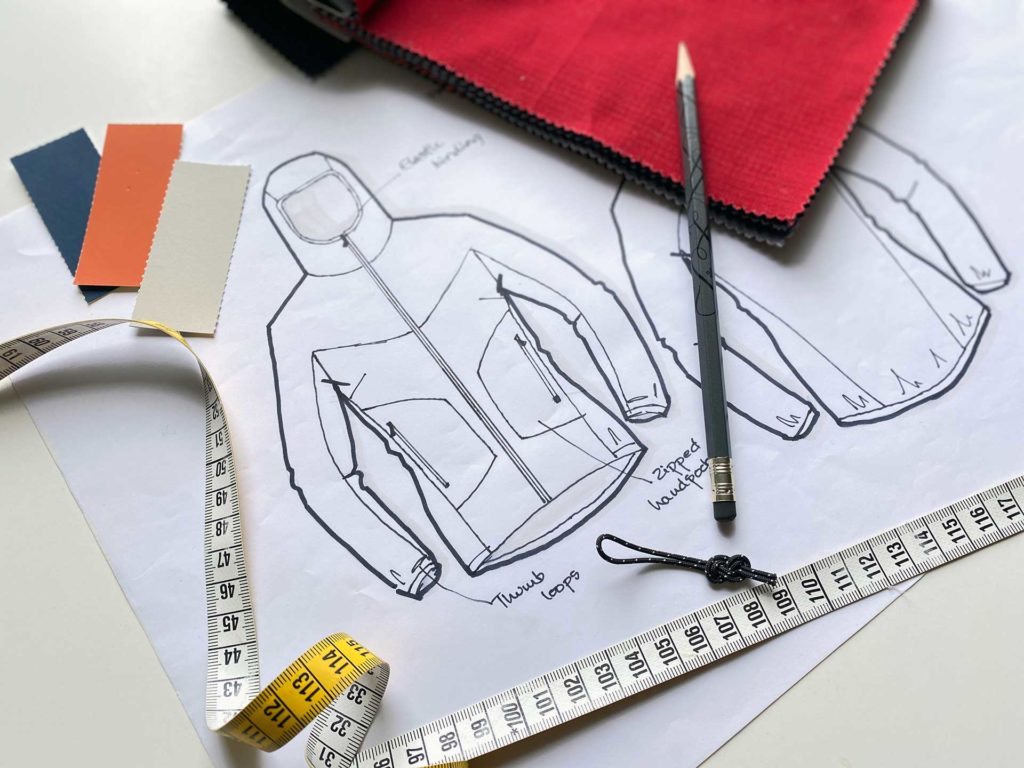
  • Technical flats (front/back, and detail views)
  • Measurement spec sheet (POMs + size chart + tolerances)
  • Bill of Materials (BOM) for fabric, trims, labels, packaging
  • Construction details (stitch types, seam types, SPI, finishes)
  • Colorways (codes, placements, contrast mapping)
  • Graphics / prints / embroideries (artwork, placement, method, size, colors)
  • Labeling and branding placement (care label, main label, hangtags)
  • Packaging instructions (folding, polybag, carton, barcode/label requirements)
  • Fit intent notes (how it should feel and sit on body)
  • QC requirements (defects you will reject, test requirements if applicable)
  • Sample tracking and revision log (fit comments and change history)


Not every garment needs the same number of pages. A basic tee might be 4 to 6 pages. A technical jacket can be 12 pages or more.

Ready-To-Use Templates

Professional templates, systems, and planners trusted by fashion founders worldwide - everything you need to help run and scale your brand.

4) Tech pack pages: the exact page-by-page structure

Use this as your default structure. It’s the fastest way to create consistent tech packs across a collection.

Page 1 – Cover sheet

  • Brand name, style name, style number, season/drop
  • Category (tee, hoodie, jacket, leggings etc.)
  • Target gender and fit type (oversized, slim, relaxed)
  • Sample size and base size (usually M or S depending on market)
  • Date + version number
  • Factory name (if known) and contact
  • A thumbnail flat sketch

Page 2 – Technical flats (front/back)

  • Clean vector flats (front and back)
  • Callouts for key details (pockets, panels, collars, zippers, plackets)
  • Stitching and seam placements
  • Artwork placement guides (if needed)

Page 3 – Detail flats

This is where you reduce mistakes.

  • Zoom-ins of every tricky area
  • Cross-sections (how layers are constructed)
  • Closure details (zipper, snaps, buttons)
  • Pocket bag construction
  • Hem/cuff finishes

Page 4 – Measurement spec sheet (POMs + tolerances)

  • Points of measure list (clearly defined)
  • Size chart (all sizes you will produce)
  • Tolerances (allowed variance)
  • Measurement method notes (how to measure)

Page 5 – Bill of Materials (BOM)

  • Main fabric (content, weight, width, finish)
  • Lining/interlining (if applicable)
  • Trims (zippers, buttons, cords, elastics, snaps) with codes and suppliers
  • Labels (main, size, care, country of origin)
  • Thread specs (when needed)
  • Packaging components (polybag, hangtag, carton label)

Page 6 – Construction + workmanship

  • Seam types and stitch types
  • SPI (stitches per inch) or equivalent standard
  • Reinforcement points (bar tacks, stress areas)
  • Seam allowance notes (if required)
  • Pressing and finishing notes

Page 7 – Colorways

  • All approved colorways with codes
  • Contrast mapping (where each color applies)
  • Pantone references (if used)
  • Trim color matching notes

Page 8 – Graphics, prints, embroidery (if applicable)

  • Artwork file names and versions
  • Placement measurements and alignment
  • Application method (screen print, DTG, embroidery, heat transfer)
  • Size in mm/inches
  • Color callouts

Page 9 – Labels + packaging

  • Label placements with measurements from key points
  • Care label text and language requirements (if applicable)
  • Hangtag placement, string type, safety pins etc.
  • Folding and bagging instructions
  • Barcode/size sticker placement

Page 10+ – Fit comments + revision log

This is what keeps your development process sane.

  • Sample 1 comments and requested changes
  • Sample 2 comments and final approvals
  • A change log with date, what changed, and why
  • Approval sign-off notes (who approved what)


Clothing Brand Launch Accelerator - 6 Weeks

Get ready to build and launch a fashion/apparel brand from idea to first drop, with expert guidance.

Next cohort starts April 2026

Sign Up

5) How to make a tech pack (step-by-step workflow)

  • Start with a clear design decision: silhouette, fit, and key details.
  • Create clean flats (front/back + detail views).
  • Build your measurement spec sheet (POMs + size chart).
  • Define fabrics and trims (BOM). Don’t leave this vague.
  • Add construction notes (what stitch, what finish, where).
  • Add colorways and artwork placement if applicable.
  • Add labels, packaging, and anything the factory needs to ship correctly.
  • Export to PDF and do a ‘factory test’: could someone build it without asking you questions?
  • Send, sample, then track every revision inside the tech pack.


6) Measurements, POMs, and tolerances

This is where many tech packs fail.

A factory can handle a complex design. What they cannot handle is unclear measuring points, missing tolerances, and inconsistent units.

What to include

  • A POM list with clear definitions (where exactly to measure)
  • A measurement chart for all sizes
  • Tolerances for each critical measurement (what variance is acceptable)
  • Notes on how to measure (flat garment vs body)

2026 pro tip: define what matters most

Not all measurements are equal. Identify your ‘critical measurements’ and be strict on tolerances there (neck opening, waist, hip, inseam, rise, sleeve length depending on product).


7) Bill of Materials (BOM) and trims

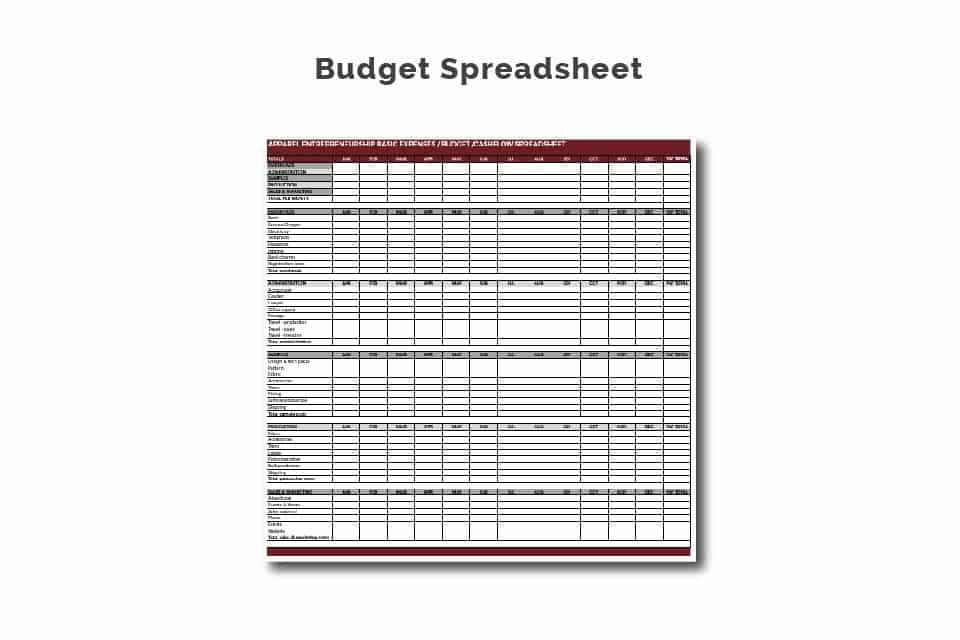
Your BOM is your cost control tool. If you want accurate costing and fewer surprises, the BOM needs to be complete.

  • Fabric content and weight (gsm/oz)
  • Finishes (brushed, enzyme washed, anti-pilling, DWR, etc.)
  • Trim codes and exact descriptions
  • Supplier references if you have them
  • Color requirements and matching notes


If you don’t know exact suppliers yet, use clear placeholders and minimum requirements. Vague BOMs create vague products.


8) Construction details and quality checkpoints

The tech pack is also a quality document. If you don’t specify the standard, you’ll get the factory’s default – and that might not match your brand.

Add workmanship details like:

  • Stitch type and seam type per area
  • Reinforcement at stress points
  • Edge finishing requirements
  • Symmetry notes (pocket placement must match within X mm)
  • What defects are unacceptable (twisted seams, puckering, shade variation, misaligned print)


9) Colorways, graphics, prints, and placements

If your product has graphics, prints, embroidery, or trims, your tech pack needs to remove interpretation.

  • Artwork file name + version
  • Application method
  • Placement measurements from fixed points
  • Size and scale
  • Approved colors and color codes
  • Acceptable alignment tolerance (yes, this matters)


10) Labels, packaging, and compliance info (2026 reality)

Packaging and labeling mistakes create real cost: relabeling, repacking, delays, and returns.

At minimum, include:

  • Care label placement and content requirements
  • Size label placement
  • Hangtag placement and components
  • Folding and polybag instructions
  • Carton labeling requirements
  • Barcode or SKU sticker placement


2026 note: if you sell across markets, you may need different labeling requirements. Your tech pack is where you keep that consistent style to style.

Apparel Entrepreneurship Book
The Complete Guide To Running An Apparel Brand, from idea to market launch, and beyond.

11) Fit comments, sample tracking, and version control

Your goal is fewer samples. The ‘normal’ procedure might be 2 prototypes + one salesman sample, then potentially size set and pre-production sample depending on your control level.

But the real secret is not the number of samples. It’s how you document changes.

  • Use version numbers: V1, V2, V3
  • Keep a change log inside the tech pack
  • Write fit comments in clear, measurable terms (not feelings)
  • Use photos with marked-up notes when needed


If you don’t control versions, you will end up with multiple ‘truths’ in circulation. That is how production mistakes happen.


12) Tech pack formats: Illustrator, Excel, PDF, PLM

Most tech packs are created in Adobe Illustrator for flats, combined with measurement tables and BOMs, then exported as a non-editable PDF for factories.

What to use in 2026:

  • Illustrator (or similar) for clean vector flats
  • Excel or Google Sheets for spec tables and BOM if your template uses it
  • PDF for sending to factories (locks the file)
  • PLM systems when you have many styles, many suppliers, and need version control at scale


If you are starting out, a strong template + clean PDF workflow is enough. Complexity can come later.


13) How much does a tech pack cost? (DIY vs outsourced)

Costs vary by region, complexity, and who creates it.

  • DIY: your time + software + learning curve
  • Outsourced freelancer: often priced per style (more complex garments cost more)
  • Agency/technical designer: higher cost, typically more reliable structure and production thinking


A cheaper tech pack that creates expensive sample mistakes is not cheaper. The real cost is what happens after you send it to the factory.


14) AI and modern tools for tech packs (2026 playbook)

AI can help you move faster, but it doesn’t remove the need for accuracy. Use AI for drafting and organizing, not for guessing.

Best uses of AI

  • Drafting first-pass measurement tables (you must verify)
  • Generating BOM checklists so you don’t forget components
  • Writing clear construction notes from your own instructions
  • Turning fit comments into structured, factory-friendly language
  • Creating version summaries (what changed from V2 to V3)


Prompt template (copy/paste):

  • Turn these design notes into tech pack instructions. Output: (1) BOM checklist, (2) construction notes by area, (3) quality checkpoints, (4) packaging and labeling checklist. Keep it practical and factory-friendly.


AI caution

AI can sound confident while being wrong. Never let AI invent measurements, tolerances, or construction details you haven’t validated. Use it to accelerate writing and structure, not to replace technical decisions.


15) Common tech pack mistakes and how to avoid them

  • Vague flats – fix: clean vector drawings with detail views.
  • Missing tolerances – fix: define acceptable variance for key measurements.
  • No BOM – fix: list every component, including labels and packaging.
  • No version control – fix: V1/V2/V3 with a change log.
  • Using words like ‘nice’, ‘premium’, ‘high quality’ instead of measurable specs – fix: define stitch types, finishes, testing, and rejection criteria.
  • Assuming the factory will fill in the gaps – fix: if it matters to you, it must be written.

A good tech pack is not extra work. It is what makes the rest of your product development easier.

It reduces mistakes, speeds up sampling, improves costing accuracy, and protects your brand’s quality.

If you want to be taken seriously by manufacturers, bring a serious tech pack.

And if you want a shortcut, use templates and get expert eyes on your first few – the learning curve is worth it.

ADVISORY & COACHING

Unlock Clarity, Confidence & Strategic Growth for Your Apparel Brand. One-to-one consulting with founder-level mentorship, advisory, tools & accountability to turn your fashion business from stuck to scalable.

How we can help (templates, coaching, course, 6-week accelerator)

If you want to move faster and avoid costly sample mistakes, here are the best ways we support founders:


Option 1: 6-week accelerator

If you want speed and accountability, our 6-week accelerator helps you go from idea to market-ready plan with weekly guidance and templates included.


Option 2: Coaching or advisory

Perfect if you want an expert to review your tech pack, tighten your spec, and make sure your factory can actually execute it.


Option 3: Startup course

If you’re building a full clothing brand, our course walks you through the end-to-end process from concept to factory-ready.


Option 4: Tech Pack Templates 

  • Ready-made tech pack layout
  • Measurement spec sheet templates
  • BOM templates
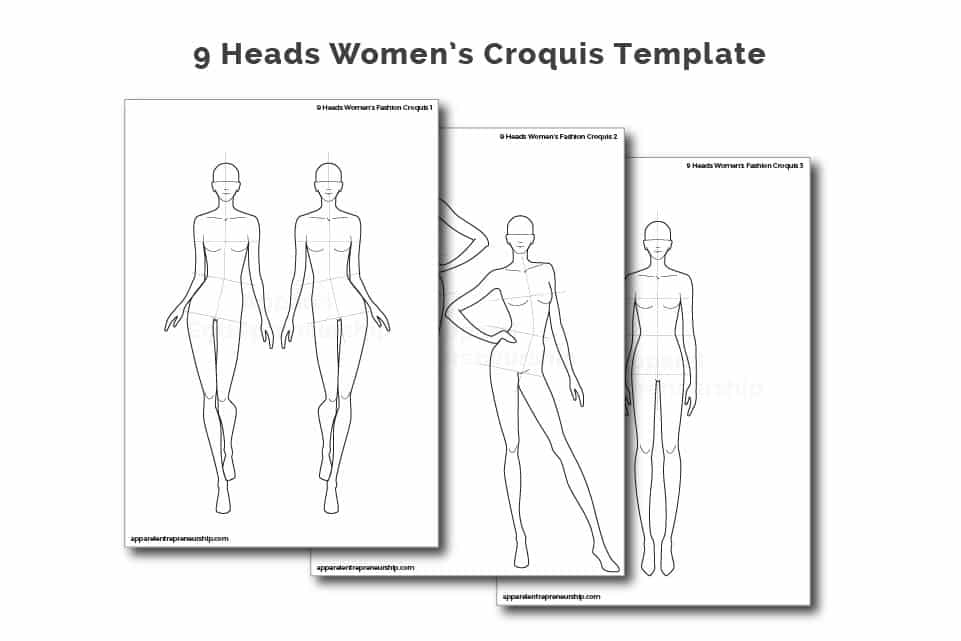
  • Vector flats and croquis assets
  • Checklists so you don’t miss critical info


Let’s grow your brand!

Sign up for our Newsletter, giving you industry updates, content, tools, inspiration, guides, and special offers.

Your data will be handled according to our privacy policy.